



How to Improve Paver Installation Speed by Up to 40%
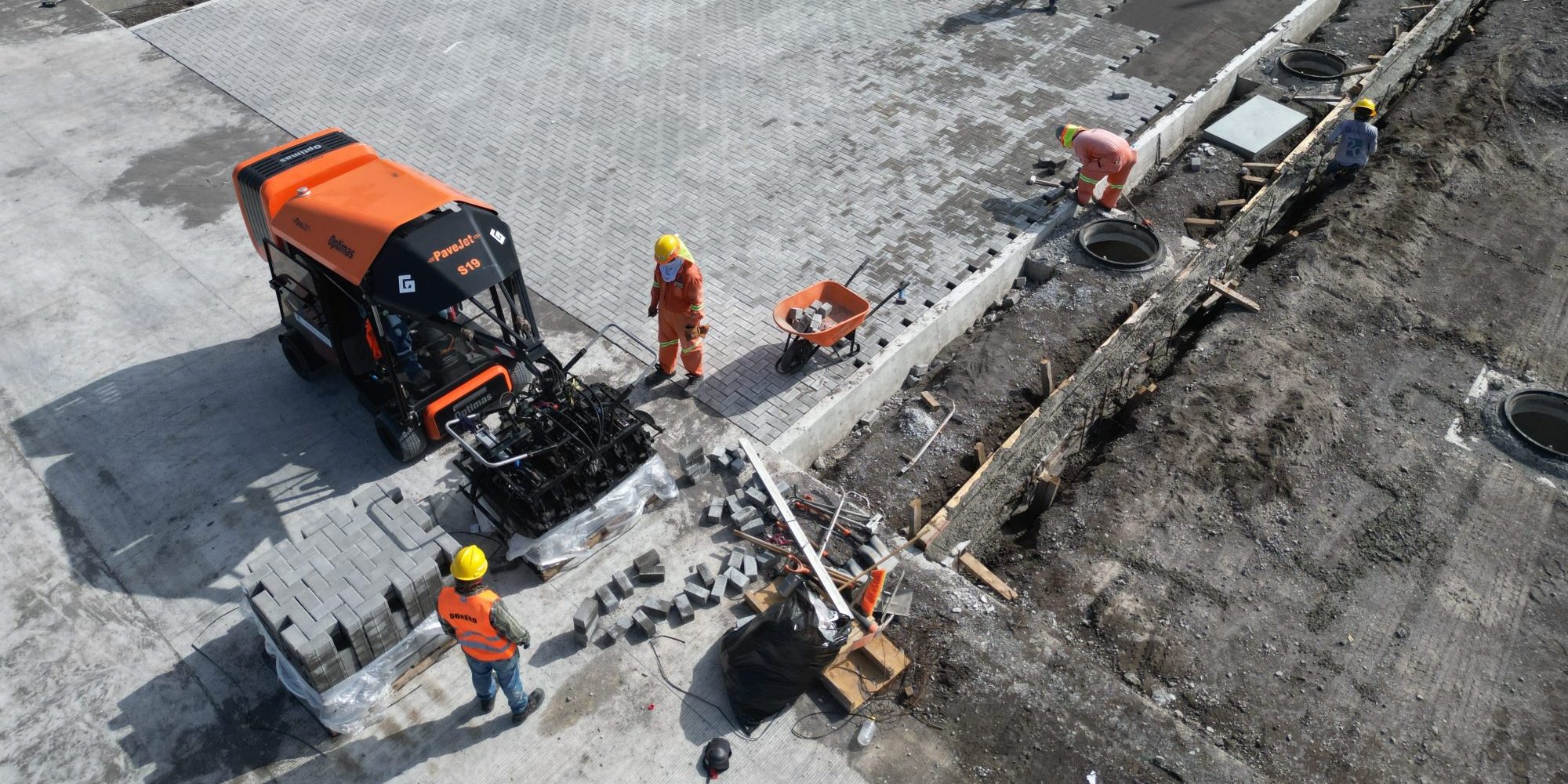
In industrial and urban development projects where the volume of paved surface is very large, traditional manual installation is not feasible. It requires a significant amount of labor, and with many crews on-site, work quality tends to decrease while execution times become very long.
For large projects where time is critical, the installation of pavers must be mechanized using specialized machinery. This approach can reduce execution time by up to 40%, according to data collected from various projects carried out with Optimas equipment — all without compromising work quality.
What does “improving installation speed” actually mean on-site?
When we talk about higher speed, it’s not just about working faster. It means:
- Higher daily production of installed pavers
- Improved work quality (levels and alignment)
- Lower labor costs
- Reduced execution times
With mechanical equipment, you can lift an entire bundle of pavers and place it in one motion, instead of handling each piece individually. That’s a game-changer.
The equipment that makes the difference: Optimas machines
One of the main drivers of improved installation speed is the use of Optimas machines, a German brand distributed in many countries. Some of their standout models include:
- Pacer P22: ideal for medium or small projects; capable of installing 480–600 m² per day, depending on the paver type.
- S24 PaveJet: designed for larger projects, with a highly efficient placing cycle. With proper site organization, it can achieve 800–1,000 m² per day.
These machines operate with a hydraulic clamp system with multiple “arms,” allowing a grip of 0.60 to 1.5 m² of pavers per cycle.
How does this translate into a 40% increase in speed?
| Variable | Manual Installation | Mechanized Installation (Optimas) |
|---|---|---|
| Average daily production | 150–250 m²/day | 480–1,000 m²/day |
| Required labor | 6–10 people | 2–4 people |
| Physical effort | Very high (fatigue after 3–4 hours) | Low (operator + assistants) |
| Alignment | Variable (highly dependent on workers) | Uniform and consistent |
| Injury risk | High (posture, weight, repetition) | Low |
| Delay rate | Medium/High | Low |
| Cost per m² | Higher (more hours/workers) | Lower (less labor/time) |
Common mistakes (and how to avoid them)
- Thinking the machine does everything on its own: You still need skilled personnel for preparation and supervision.
- Poorly organized paver bundles: If bundles are misaligned or placed incorrectly, efficiency drops drastically.
- Not checking the base before installation: You may place faster, but if the base is wrong, you’ll have to redo the work.
- Not protecting completed areas: Premature traffic can damage the bedding layer or misalign the pavers.


Mechanizing paver installation isn’t just a technological upgrade — it’s a strategic decision to save time, reduce costs, and improve quality without compromising worker safety. Investing in an Optimas machine can be the difference between a slow-moving project and one that is delivered efficiently, quickly, and with excellent results.
Interested in knowing which model is right for your project?
Send us the total m² to be installed, the type of paver, and your site conditions, and we’ll recommend the ideal equipment for your needs.
Sources and References
- Optimas — Paver Laying Machine PaveJet S24 – Technical Sheet
- Optimas — Pacer P22 – Product Technical Data
- Optimas — S19/S24 Clamp System – Technical Manual (Multi-6 Clamp
